

The Truth About Lye: Why Real Soap Can’t Exist Without It
Share
There are few ingredients in the personal care aisle that sound quite as intimidating as lye.
The word alone can make people nervous. After all, raw lye has a well-earned reputation for being caustic, aggressive, and something that demands extreme caution. So when someone picks up a luxurious hand crafted soap bar from Seventh Sojourn, glances at the ingredient list, and sees "lye" printed right there on the label, it is entirely natural to pause and ask:
“Wait… isn’t lye dangerous? Why on earth would I want that anywhere near my skin?”
Here is the surprising, science-backed answer: Because without lye, true, traditional bar soap simply cannot exist.
Lye is not a harsh additive sloshed into a pot to cheapen a formula. Lye is the essential catalyst that fuels a magical chemical transformation—converting rich natural oils and raw botanicals into genuine, skin-nourishing handmade soap.
Once you understand what actually happens during that scientific transformation, the word "lye" stops being frightening and becomes downright fascinating. Let’s dive into the chemistry, clear up the myths, and explore why Seventh Sojourn embraces transparent, traditional soapmaking to craft the finest hand crafted soap bars available.
What Exactly Is Lye?
When artisans craft traditional bar soap, the lye used is sodium hydroxide, chemically represented as NaOH.
SODIUM HYDROXIDE (NaOH)
• A pure, strong alkali compound.
• Highly caustic and reactive in concentrated liquid form.
• The mandatory chemical reactant for all solid bar soap.
In its raw, highly concentrated state, sodium hydroxide is indeed caustic. Professional soapmakers must handle it with absolute respect, using safety goggles, heavy-duty gloves, and strict temperature controls during production. It is definitely not a substance to be treated casually.
However, here is the crucial distinction that often gets lost in public conversation:
The lye used to make handmade soap is a reactant, not an additive.
Lye is not poured into a mold, mixed with a little perfume, and left to sit. Instead, it acts as a molecular key. When introduced to natural fats and oils, sodium hydroxide triggers an irreversible chemical reaction known as saponification.
During saponification, every single molecule of lye binds with fat molecules, completely consuming the raw alkali and turning it into something entirely new: pure bar soap and rich, hydrating glycerin.
The Chemistry Behind the Bar: From Raw Fats to Pure Lather
Traditional soapmaking is chemistry at its most beautiful.
A master soapmaker at Seventh Sojourn begins with a carefully calculated blend of premium fats, oils, and natural lipids. The signature Seventh Sojourn soap base includes:
● Nutrient-Rich Tallow: Provides a hard, long-lasting bar and matches the skin's natural lipid structure.
● Pure Olive Oil: Valued for centuries for its ultra-gentle, deeply conditioning properties.
● Coconut Oil: Creates a rich, creamy, deep-cleansing lather that cuts through dirt and grime.
● Raw Shea Butter: Infuses the bar with fatty acids and vitamins for maximum skin comfort.
● Raw Silk: Adds an extraordinarily smooth, velvety glide to every lather.
● Pure Water & Sodium Hydroxide (Lye): The essential reaction agents.
Think of it like baking a loaf of bread or a birthday cake. You wouldn't look at a fresh slice of chocolate cake and say, "I refuse to eat this because it contains raw flour and raw eggs." The raw ingredients undergo a thermal and chemical transformation in the oven.
Soapmaking operates under the exact same scientific principle. The raw materials combine, react, and transform completely.
Is There Lye in the Finished Bar Soap?
This is the single biggest misconception surrounding authentic handmade soap.
People sometimes picture a hand crafted soap bar as a block of cold oil with raw, burning lye suspended inside it. That is simply not how properly formulated handmade soap works.
At Seventh Sojourn, every batch is crafted using precise mathematical formulas known as saponification tables. These calculations ensure that the exact ratio of fats to alkali is used, leaving zero unreacted lye in the finished product.
In fact, artisans intentionally use a process called superfatting—adding extra nourishing oils and shea butter beyond what the lye can consume. This guarantees two things:
- Every last molecule of lye is entirely neutralized and transformed.
- An abundance of un-saponified, skin-loving oils remain in the bar to lock in hydration.
The Essential Curing Process
Beyond precise calculations, time plays a vital role. After Seventh Sojourn hand-pours and cuts their soap, the bars are set on aging racks to undergoing a multi-week curing process.
During curing:
● Saponification reaches absolute 100% completion.
● Any remaining excess water gradually evaporates.
● The bar hardens into a dense, long-lasting, ultra-mild piece of bar soap.
By the time a Seventh Sojourn bar reaches your shower, it doesn't contain a single trace of raw lye.
Why Can’t You Just Make Soap Without Lye?
This brings us right back to the core truth: Real soap cannot exist without lye.
From a strict scientific and legal standpoint, true soap is defined by the chemical reaction between an alkali and fatty acids.
|
Soap Type |
Required Alkali Base |
End Product |
|
Solid Bar Soap |
Sodium Hydroxide ($NaOH$) |
Hard, long-lasting hand crafted soap bars |
|
Liquid Soap |
Potassium Hydroxide ($KOH$) |
Smooth, fluid liquid soap |
Without an alkali base like lye, no chemical reaction occurs. You just have a bowl of greasy oils floating on top of water.
What About Products Labeled "Lye-Free Soap"?
If you wander down a grocery store aisle, you might see commercial cleansers or body washes proudly claiming to be "Lye-Free!" Or you might find craft-store blocks labeled "Melt & Pour Soap Base: No Lye Used!"
Here is what is actually happening behind those marketing claims:
- Synthetic Detergent Bars (Syndets): Most commercial "beauty bars" are not soap at all. They are petroleum-derived synthetic detergents compressed into a bar shape. They don't use lye because they aren't soap—they are solid detergent bricks designed to strip oil off your skin.
- Pre-Made Melt & Pour Bases: If a craft maker sells a "lye-free" bar made from a melt-and-pour block, lye was used—it was just used weeks earlier in a factory where the base was first saponified!
When you want genuine, traditional, skin-friendly handmade soap, lye was part of the story. There are no shortcuts around chemistry.
How Lye Creates Soap's Unique Cleaning Power
So, what does lye actually achieve once it transforms fats into soap molecules? It creates a microscopic superpower known as an amphiphilic molecule.
During saponification, lye restructures fatty acid chains into molecules with two distinct ends:
[ HYDROPHILIC HEAD ] ─── Attracted to Water
│
│
[ HYDROPHOBIC TAIL ] ─── Attracted to Dirt, Sebum, & Bacteria
● The Hydrophobic Tail: Hates water, but loves dirt, oil, grime, and grease. It latches onto impurities on your skin.
● The Hydrophilic Head: Loves water. When you rinse with clean water, the head grabs the water flow, washing the attached dirt effortlessly down the drain.
Without the chemical reaction triggered by lye, plant oils and tallow would just sit on your skin without washing off. Lye is what unlocks the cleansing magic of nature.
The Ultimate Bonus: Naturally Occurring Glycerin
The magic of saponification doesn't stop at creating cleansing soap molecules. The exact same chemical reaction naturally yields an abundance of glycerin.
Glycerin is a world-renowned humectant—a moisture magnet that actively draws hydration from the air into your skin's outer layers.
Commercial soap factories routinely strip this precious glycerin out of their batches to sell it off to lotion companies. But Seventh Sojourn preserves 100% of that naturally created glycerin in every single bar.
When you wash with Seventh Sojourn hand crafted soap bars, the retained glycerin works alongside shea butter and olive oil to leave your skin feeling soft, hydrated, and deeply comfortable rather than dry or itchy.
The Seventh Sojourn Difference: Artistry Meets Science
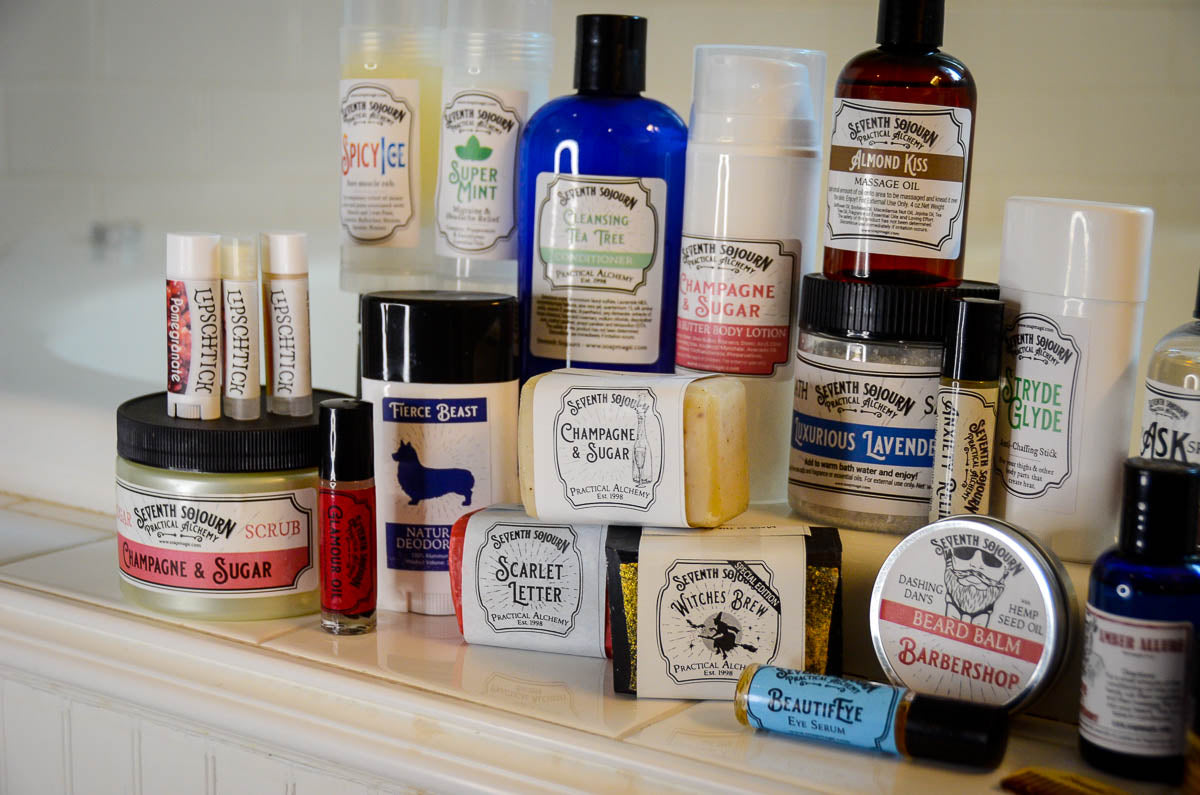
Since 1998, Seventh Sojourn has combined traditional soapmaking chemistry with small-batch artisanal craft.
Rather than taking industrial shortcuts, Seventh Sojourn builds every batch on a foundation of premium fats, raw silk, and precise saponification. From there, they infuse each unique hand crafted soap bar with a distinct personality using:
● Pure, aromatic essential oils and custom fine fragrances.
● Natural herbs, botanicals, and warming spices.
● Vibrant mineral pigments and natural teas.
A Bar for Every Body
Whether you prefer a sensory journey or total simplicity, Seventh Sojourn offers formulated bar soap options for every skin type:
● Exotic Botanical Blends: Vibrant bars infused with spices, herbal teas, and rich fragrances for an uplifting shower experience.
● Simple White Unscented Soap: Formulated specifically for ultra-sensitive skin, this bar features the classic Seventh Sojourn base ingredients without added fragrances or colorants—allowing you to experience pure, traditional handmade soap at its cleanest.
Why Ingredient Transparency Matters
At Seventh Sojourn, lye isn't hidden behind vague chemical terms. It is openly listed on the label as part of the soapmaking process.
That transparency is something consumers should celebrate. Ingredient honesty allows you to make informed decisions for your family based on real science rather than fear-based marketing.
Raw lye sounds scary because, in its unreacted form, it demands caution. But so does raw lightning—and yet we use harnessed electricity to light our homes every single day. The real measure of an ingredient isn't just what it does in a test tube, but how it is transformed in the hands of a master artisan.
Summary: The Truth About Lye
When you hold a bar of Seventh Sojourn handmade soap, you are holding centuries of chemistry and craftsmanship in the palm of your hand.
- Raw lye is caustic, requiring professional safety gear and precise measurements during the mixing process.
- Lye is mandatory for the traditional saponification process that turns natural oils into true soap.
- Zero raw lye remains in a properly formulated, fully cured Seventh Sojourn bar soap.
- Natural glycerin is born as a direct result of the lye reaction, providing built-in skin hydration.
So the next time you see "lye" on a soap label, don't shrink away. Recognize it as the mark of authentic, traditionally crafted bar soap made by people who know and respect their craft.
Discover Authentic Handmade Soap Today
Ready to experience the velvety lather, rich natural hydration, and artisanal fragrances of real hand crafted soap bars?
Ditch the synthetic detergent bars and treat your skin to the luxury it deserves. Explore the full collection of artisan handmade soap, body mists, and skin-loving bath essentials today at Seventh Sojourn.
Shop Seventh Sojourn Hand Crafted Soap Bars Here
Seventh Sojourn — Crafting pure, traditional, glycerin-rich handmade soap since 1998.