

Why Handmade Soap Costs More (And Why It’s Worth Every Penny)
Share
There was a time when you could walk into any supermarket, grab a multi-pack of soap for a few dollars, and never give a second thought to how it was made or what went into it. Today, however, as you browse an artisan market or an online boutique, you might spot handcrafted bar soap priced at $8, $12, or even $15.
Your immediate reaction might be: “Why does handmade soap cost so much?”
It’s a fair question. After all, it’s soap. You use it to wash your hands or body, it eventually dissolves down the drain, and you buy another. But comparing handmade, cold-process soap to a mass-produced commercial bar based solely on price is like comparing a freshly baked sourdough from a local bakery to a processed, white sliced loaf from a convenience store shelf. Both serve a basic purpose, but their ingredients, craftsmanship, and overall quality couldn't be more different.
The rising price of handmade soap isn't about artisan makers inflating prices for profit. It’s the direct result of skyrocketing raw ingredient costs, labor-intensive production, extended cure times, sustainable packaging, and the sheer amount of hands-on skill required to make every single bar.
When you buy from an independent soapmaker, you aren't just paying for a wash—you're supporting an entire supply chain of craft, care, and small business integrity.
The Real Cost Breakdown: What Goes Into an $8–$15 Soap Bar?
To understand why artisan soap carries a higher price tag, it helps to look under the hood. A handmade soapmaker’s costs extend far beyond basic manufacturing.
|
Cost Component |
What It Actually Includes |
Why It Increases the Price |
|
Raw Ingredients |
Cold-pressed plant oils (olive, coconut, castor), rich plant seed butters (shea, cocoa), pure essential oils, fine fragrance oils, clays, and natural botanicals. |
High-quality, food-grade or organic oils fluctuate in price and must be purchased before a single bar is sold. |
|
Safety & Testing |
High-purity sodium hydroxide (lye), safety gear, scale calibration, and precise recipe formulation. |
Precise chemistry requires specialized equipment and safe handling protocols. |
|
Curing & Storage |
Dedicated, temperature-controlled curing racks, humidity management, and physical space occupied for 4–6 weeks. |
Inventory is locked up for weeks at a time before it can generate revenue. |
|
Packaging & Labeling |
Eco-friendly boxes, band labels, biodegradable shrink wrap, ingredient compliance labels, and shipping materials. |
Custom packaging in smaller quantities carries a significantly higher cost per unit. |
|
Business Overhead |
Product liability insurance, website hosting, merchant processing fees, business licensing, taxes, and facility utilities. |
Essential operational costs that must be distributed across small production runs. |
|
Artisan Labor |
Recipe design, oil melting, lye mixing, pouring, swirling, cutting, beveling, wrapping, photographing, and shipping. |
Every bar is handled by human hands multiple times throughout its creation. |
1. It Begins with Real, Uncompromising Ingredients
The biggest difference between commercial "cleansing bars" and genuine handmade soap comes down to formulation. Mass-market synthetic bars rely heavily on cheap petroleum derivatives, artificial detergents, chemical hardeners, and synthetic foaming agents.
By contrast, an artisan soapmaker formulates recipes around nutrient-rich oils and fats:
● Olive Oil: Provides a gentle, moisturizing, deeply conditioning lather.
● Shea & Cocoa Butters: Supply rich fatty acids that nourish and protect the skin's moisture barrier.
● Coconut Oil: Creates a cleansing, fluffy, abundant lather.
● Castor Oil: Draws moisture to the skin while stabilizing rich, creamy bubbles.
● Natural Clays & Botanicals: Provide gentle exfoliation, natural color, and skin-soothing properties.
These ingredients are inherently expensive. Furthermore, small-scale artisan soapmakers cannot purchase raw materials in multi-ton tanker trucks like multinational conglomerates. Buying ingredients in smaller wholesale quantities means paying a higher price per ounce—a cost that directly impacts the final price of each bar.
2. The Science of Saponification (Demystifying Lye)
A common misconception is that because traditional soap is made with lye (sodium hydroxide), it ought to be cheap to produce. In reality, lye is simply the essential catalyst for real soapmaking.
Through the chemical process of saponification, lye reacts with fatty acids in the oils to turn them into soap and natural glycerin. In the finished, properly cured bar, no active lye remains.
Unlike commercial manufacturers—who often strip the naturally occurring glycerin out of their soap to sell it separately in high-priced lotions—artisan soapmakers leave every bit of moisturizing glycerin intact. You are paying for a chemical reaction calculated down to the precise gram, ensuring a bar that cleanses without leaving skin stripped, dry, or itchy.
3. Labor and the 6-Week Curing Cycle
Handmade soap cannot be rushed. Unlike commercial factories that heat, extrude, and stomp out thousands of uniform bars per hour on automated assembly lines, traditional cold-process soapmaking is a slow art.
[ Recipe Formulation ] ➔ [ Precision Measuring ] ➔ [ Temperature-Controlled Mixing ]
❚
[ Packaging & Shipping ] ◄– [ Hand-Beveling ] ◄– [ 4 to 6 Week Curing ] ◄– [ Hand-Cutting ]
- Precision Hand-Mixing: Oils and lye are combined at exact temperatures to achieve "trace," the point where saponification begins.
- Artisan Pouring & Design: Colors, clays, and essential oil blends are hand-swirled into molds.
- Cutting & Beveling: After setting for 24–48 hours, the block of soap is hand-cut into individual bars, and edges are often planed or beveled by hand.
- The Curing Wall: Bars sit on curing racks for 4 to 6 weeks. During this time, water slowly evaporates, producing a harder, milder, and longer-lasting bar.
From a business standpoint, a 6-week cure time means the soapmaker’s capital is tied up in inventory that cannot be sold immediately. That patient investment of time and storage space is built into the value of every bar.
Commercial Soap vs. Artisan Soap: At a Glance
|
Feature |
Mass-Produced Commercial Soap |
Handmade Artisan Soap |
|
Primary Base |
Petroleum-based synthetic detergents (SLS/SLES) |
Pure saponified plant oils and rich seed butters |
|
Glycerin Content |
Stripped out and resold for cosmetics |
100% naturally retained for maximum skin hydration |
|
Fragrance |
Synthetic, heavy phthalate perfumes |
Pure essential oils or carefully phthalate-free fragrances |
|
Skin Feel |
Squeaky-clean, often tight, stripped, or dry |
Rich, creamy, hydrating, and gentle on the skin barrier |
|
Environmental Impact |
High chemical runoff, heavy plastic packaging |
Biodegradable ingredients, minimal or plastic-free packaging |
|
Economic Impact |
Profits flow to corporate shareholders |
Directly supports local artisans, families, and small businesses |
You're Investing in the Experience and the Craft
When you buy an artisan soap bar, you are purchasing more than simple hygiene—you are buying a sensory daily ritual.
The aromatherapy of pure essential oils filling a warm shower, the luxurious slip of natural plant oils, the aesthetic visual beauty of hand-poured swirls, and the tactile feel of a rich lather turn a mundane chore into a moment of self-care. It's the simple luxury of knowing exactly who made what you put on your skin.
Elevate Your Everyday with Seventh Sojourn
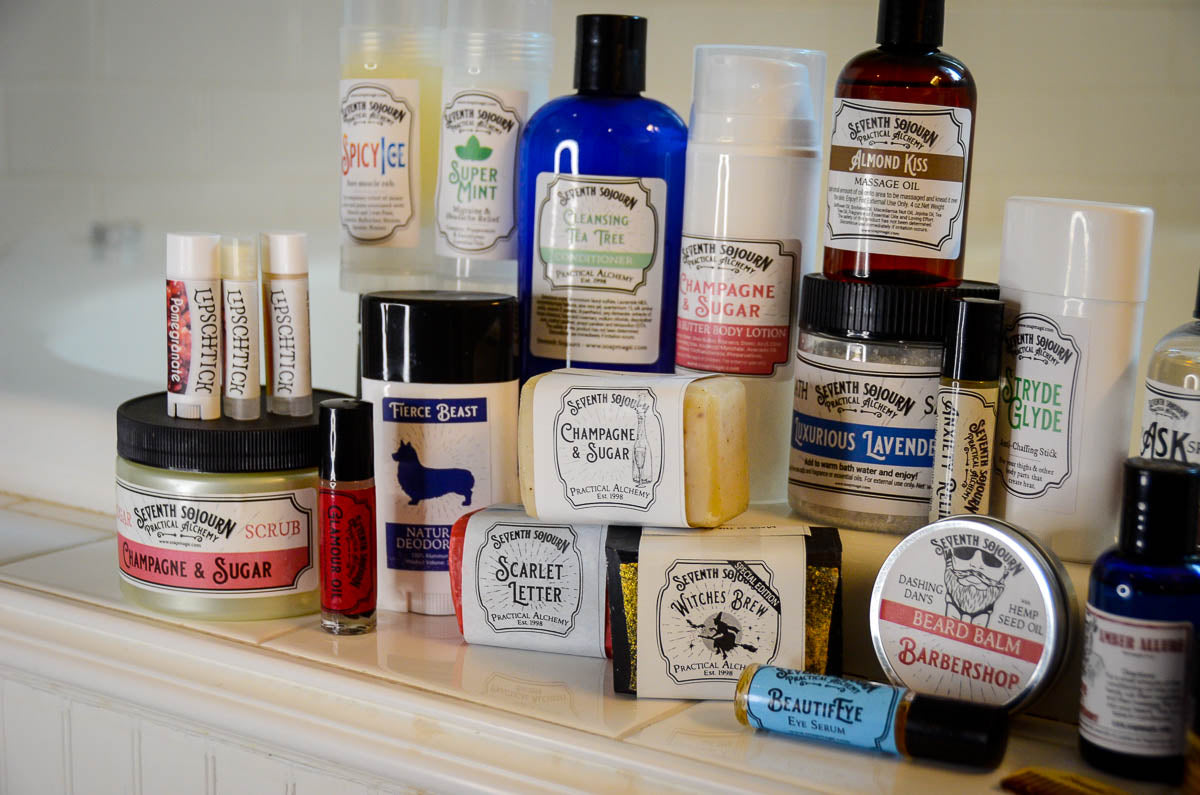
At Seventh Sojourn, handmade soap isn't treated as a mass commodity—it’s an art form. Every batch is thoughtfully formulated with premium plant oils, natural clays, aromatic spices, and distinctive botanical blends designed to elevate your daily routine.
If you’ve ever wondered whether artisan soap is worth the investment, the best way to find out is to experience the difference on your own skin.
[Explore the Seventh Sojourn Soap Collection]
Discover rich lathers, skin-loving ingredients, and scents crafted with care. Your skin will thank you.